From flood risk to flood resilience: the promise of AI and digital twins
How can we better anticipate floods, understand their potential impacts and help communities prepare before disaster strikes? As flood risk continues to challenge communities across Europe, AI and digital twins are emerging as tools that could help improve risk assessment and support better-informed decisions.
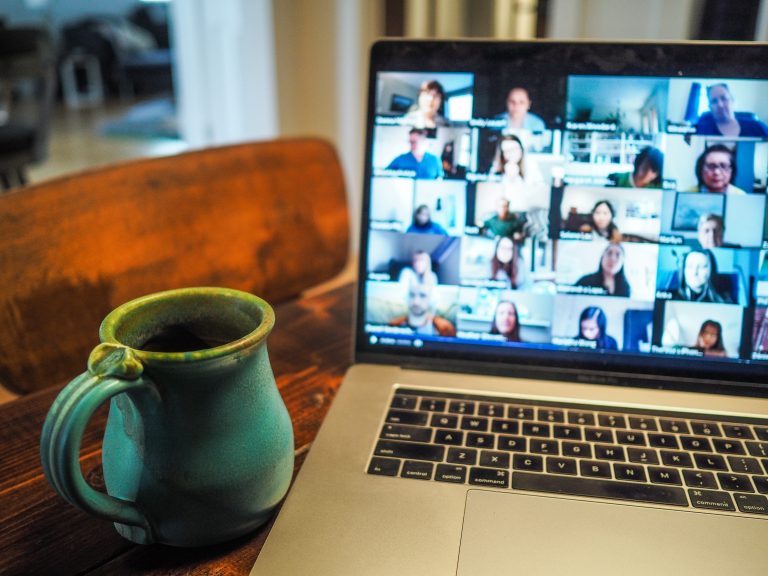
To explore their potential and practical limitations, SERN recently hosted the webinar AI and Digital Twin Solutions for Flood Risk Assessment, organised within the EU-funded RESIST project (Regions for climate change resilience through Innovation, Science and Technology). The webinar is the latest in a series exploring technological solutions to adapt to climate change in Europe; previously, we discussed about heatwave management and solutions for desertification, adaptation, and soil erosion.
This time, brought together experts from Cerema, 7Analytics, Fathom and Previsico to explore a simple but pressing question: how can we move from knowing where floods might happen to anticipating their impacts and acting in time?
Here are some of the key insights from the session.
Digital twins can help test nature-based solutions before investing in them
François Chevaux and Rémy Gasset from Cerema presented the case of Barentin, a small town in Normandy where steep slopes, a river and dry valleys create significant flood and runoff challenges. Their digital twin, calibrated on a real flood event from 2018, is now being used to test different rainfall scenarios and assess how nature-based solutions could reduce flood depth or extent. An important nuance emerged in the Q&A: nature-based solutions are most effective for frequent and moderate events, while the most extreme events call for a different kind of response.
The value of a forecast lies in the action it enables
Chris Cameron-Hann from 7Analytics showed how AI trained on physics-based models can keep pace with radar updates every two minutes, producing street- and building-level flood probabilities. In one example from Washington DC, this approach could have provided around 20 minutes of warning for a sudden cloudburst that official forecasts missed. His message was clear: forecasts don’t need millimetre accuracy, they need decision-level accuracy and well-defined triggers. He also stressed that a digital twin improves dramatically when end users share their local knowledge, and that whatever data can be shared is useful.
“Unprecedented” floods are often not unprecedented
Dr Andrew Smith from Fathom illustrated how probabilistic flood maps can reveal risks that official flood zones miss. Buildings flooded in North Carolina in 2024 sat outside government flood zones, yet Fathom’s analysis had identified the county as among the most exposed in the US two years earlier. He also explained how AI is improving global terrain data and extending climate model outputs, making it possible to build event sets covering tens of thousands of years of plausible floods across Europe to better understand tail risk.
Accurate, actionable and trusted alerts
Sam Wilks from Previsico outlined three conditions for successful flood alerting: the alert must be accurate, the information must be actionable, and users must trust it. Previsico uses AI to support rather than replace physics-based models, because AI surrogates can underestimate extreme events. AI is instead used to validate input data, speed up forecasting, detect blocked drains and culverts through cameras, and learn from every event through continuous feedback loops. A key reminder: even the best alert has limited value without a solid flood response plan behind it.
Common threads
Several messages came up again and again. Flood risk is inherently probabilistic, and moving beyond a simple “in or out of a flood zone” view is essential. AI works best when combined with physics, local knowledge and good data. And above all, technology only makes a difference when it reaches the people who need to act, whether public authorities, emergency services, infrastructure operators or communities.
This webinar forms part of SERN’s ongoing work within the RESIST project, through which European regions develop and share practical, science-based solutions to strengthen their resilience to climate change. Further webinars and resources from the project will continue to be made available through SERN’s channels in the coming months.
A warm thank you to our speakers, François Chevaux and Rémy Gasset (Cerema), Chris Cameron-Hann (7Analytics), Dr Andrew Smith (Fathom) and Sam Wilks (Previsico), and to everyone who joined and contributed to the discussion.
Interested in how technology can help climate adaptation? Take a look at our previous articles:
Digital Tools to Improve Heatwave Management
Soil, Water and Innovation: Digital Tools for Climate Adaptation
Learn more about the RESIST project and it’s Handbook of Solutions for climate resilience.