Strong regions, strong Europe? Regional funds as a competitiveness strategy
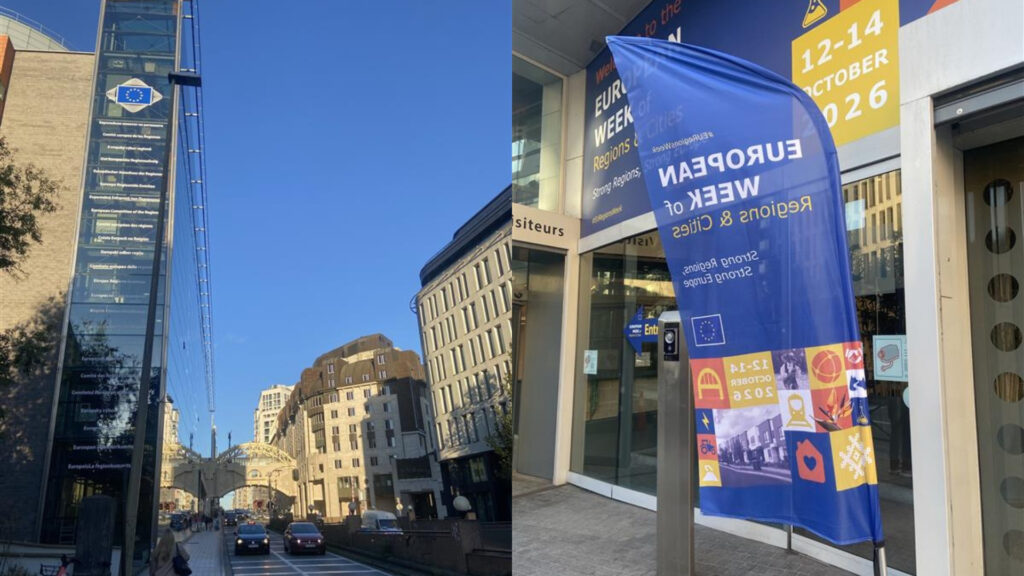
Inspired by this year’s European Week of Regions and Cities and its theme, “Strong Regions, Strong Europe”, we decided to test its central claim: is regional innovation really key to European growth and competitiveness?
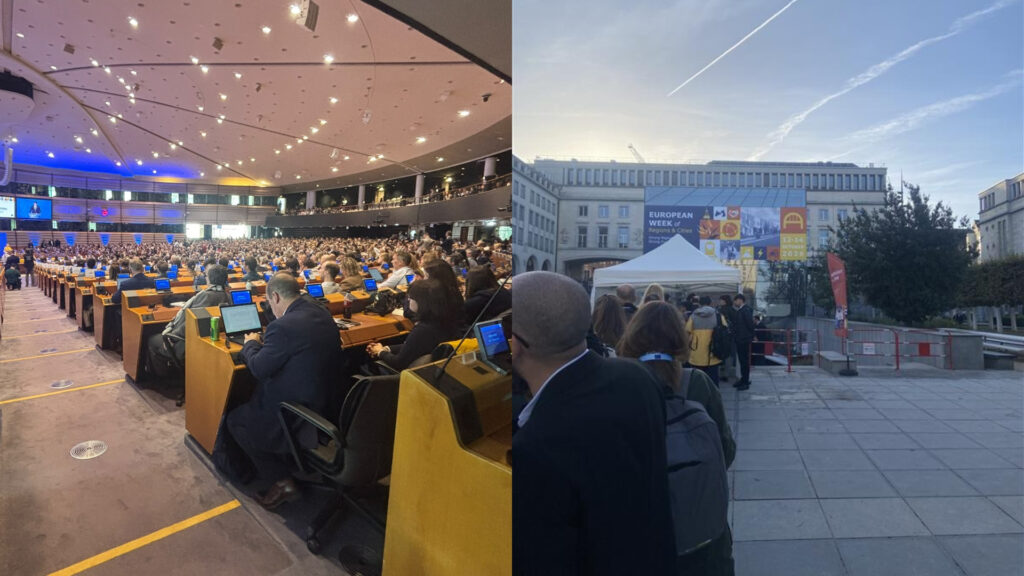
For those unfamiliar with it, the annual event organised by the European Committee of the Regions and the European Commission’s Directorate-General for Regional and Urban Policy, tackles the big questions facing regional policy. This year’s theme hit close to home for us at SERN and everyone working with innovation ecosystems: what is the role of regions in fostering European growth and competitiveness?
The question is particularly timely. As negotiations on the EU’s next budget underway, the current proposal would bring regional development funding (Cohesion Policy) under national plans negotiated with central governments, raising concerns that regions could lose funding and influence over how it is spent. Supporters (namely, the European Commission and Member States) argue that regional actors will still have a say in funding decisions. At the same time, the debate is also centered on the size of the budget, with some States and EU institutions pushing to increase it, and other States in favour of shrinking it.
But why do we need to argue for regions to have a say in decisions that affect them – and receive adequate budgets? Aren’t there other priorities, such as competitiveness and defense? That’s a tempting argument, but it doesn’t hold in practice.
So, let’s look at the numbers.
Regional funds fund competitiveness
With apologies for the alliteration, the point stands: regional policy is already a major investment in European competitiveness.
During the 2021–2027 period, almost €74 billion — nearly 20% of EU Cohesion Policy funding — went towards building “A Smarter Europe”, supporting research and innovation, digitalisation, SME competitiveness and skills. That’s the policy’s third-largest spending objective, after social inclusion (€112 billion) and the green transition (€93 billion). For comparison, Horizon Europe, the EU’s flagship research and innovation programme, has a budget of around €94 billion for the same period.
So, what does this money actually do?
Take SKALE2CT, one of SERN’s Interreg Europe projects. It helps business support organisations improve the way they help startups and SMEs scale up. One result is the European Scalability Network (ESN), which drew on experience from Grenoble (France), Porto (Portugal) and Fomento San Sebastián (Basque Country) to bring startups into international immersion programmes, specialised mentoring, and investor networks (by the way, we are having the project’s final conference in Grenoble soon – check it out).
Why a regional approach? Because Grenoble may have more in common with Porto than with Paris. Local actors understand their businesses, talent and innovation ecosystems — and are in many ways better placed to support them than a national government trying to cover an entire country.
If this is not enough, you can get a better idea of what Cohesion Policy funds on the European Commission’s Kohesio website: from research centres connecting students and industry in Bulgaria, to a new scientific centre at the Faculty of Medicine in Lithuania, fossil-free aviation business models in Sweden, and engineering centres helping Dutch SMEs attract technical talent, so they don’t have to all move to Amsterdam.
It’s not only about less wealthy countries: different places have different needs, and the European Commission itself recognises that a place-based approach “is essential for tailoring policy interventions to local characteristics, preferences and circumstances”.
Does the money actually work?
But is Cohesion Policy just solidarity, or does it benefit the wider European economy?
Research suggests the latter.
The European Commission’s Joint Research Centre estimates that every euro invested through the 2014–2020 and 2021–2027 Cohesion Policy programmes will generate €1.30 in additional EU GDP by 2030, with the return nearly tripling by 2043. A separate assessment of the 2014–2020 period estimated €2.70 in additional GDP per euro invested, 15 years after funding ends. The economic benefits grow over time. And they extend to both the countries receiving the funds and those contributing to them: another Commission study found that cross-border spillover effects accounted for around 15% of Cohesion Policy’s total GDP impact across the EU – reaching 45% for wealthier (net contributor) countries – such as Germany or the Netherlands.
Independent research is consistent with this, with a study confirming some of the same spillover effects, and another one finding that very euro of regional funding generated €1.21 in additional GDP under certain conditions (close to the Commission’s results).
And then there are the everyday gains that statistics struggle to capture: a graduate finding a job, an SME finding the right talent, a startup securing an investor, or cleaner aviation improving the air we all breathe.
Strong regions, strong Europe
So, the European Week of Regions claim holds. Regional policy generates economic growth, strengthens businesses and skills, and creates spillover effects that benefit regions and countries far beyond those receiving funding. In other words, investing in regional development is also investing in Europe’s collective competitiveness.
But these returns don’t happen in a vacuum. They depend on understanding local needs, connecting businesses with talent, and building innovation ecosystems that work on the ground. A funding strategy designed too far from those ecosystems, without regions at the table, risks overlooking precisely the opportunities it is meant to unlock.
With billions at stake in the next EU budget, the question is not whether Europe can afford to invest in its regions and their needs — but whether it can afford not to.
More from SERN
- SKALE2CT (co-funded by the European Union) heads to Grenoble for its Grand Finale! Join us at the iCapital Awards ceremony and the “From Local to Europe: Innovation for Good” event, featuring the SKALE2CT final conference: Public and Intermediary organisations’ scale-up services improvement”. We’ll showcase the project’s key achievements, tools, and best practices to support organisations in growing and scaling across Europe. Learn more and register.
- 🎥 New video blog: Discover Silver Up’s study visit to Žabljak, Montenegro! Join us as we explore how this small mountain town is tackling demographic change through local initiatives: watch now. Silver Up is co-funded by the EU via @Interreg Europe.
- What if technology could help Europe face the consequences of climate change? We explored this topic on three different webinars as part of the RESIST project (funded by the European Union). Check out our latest news article, learn what our speakers said, and follow the links to discover the RESIST toolkit: read more.
- How do we scale Startup Villages across Europe? FoodCoP (funded by the European Union) closed its two-year journey with a Policy Dialogue on this topic, presenting its new Policy Brief “From Rural Experimentation to EU Policy”: learn more.